Click on the link below the picture to see the whole task.


This is a blog with resources for teachers to use in the bilingual classroom, created by CFPI.
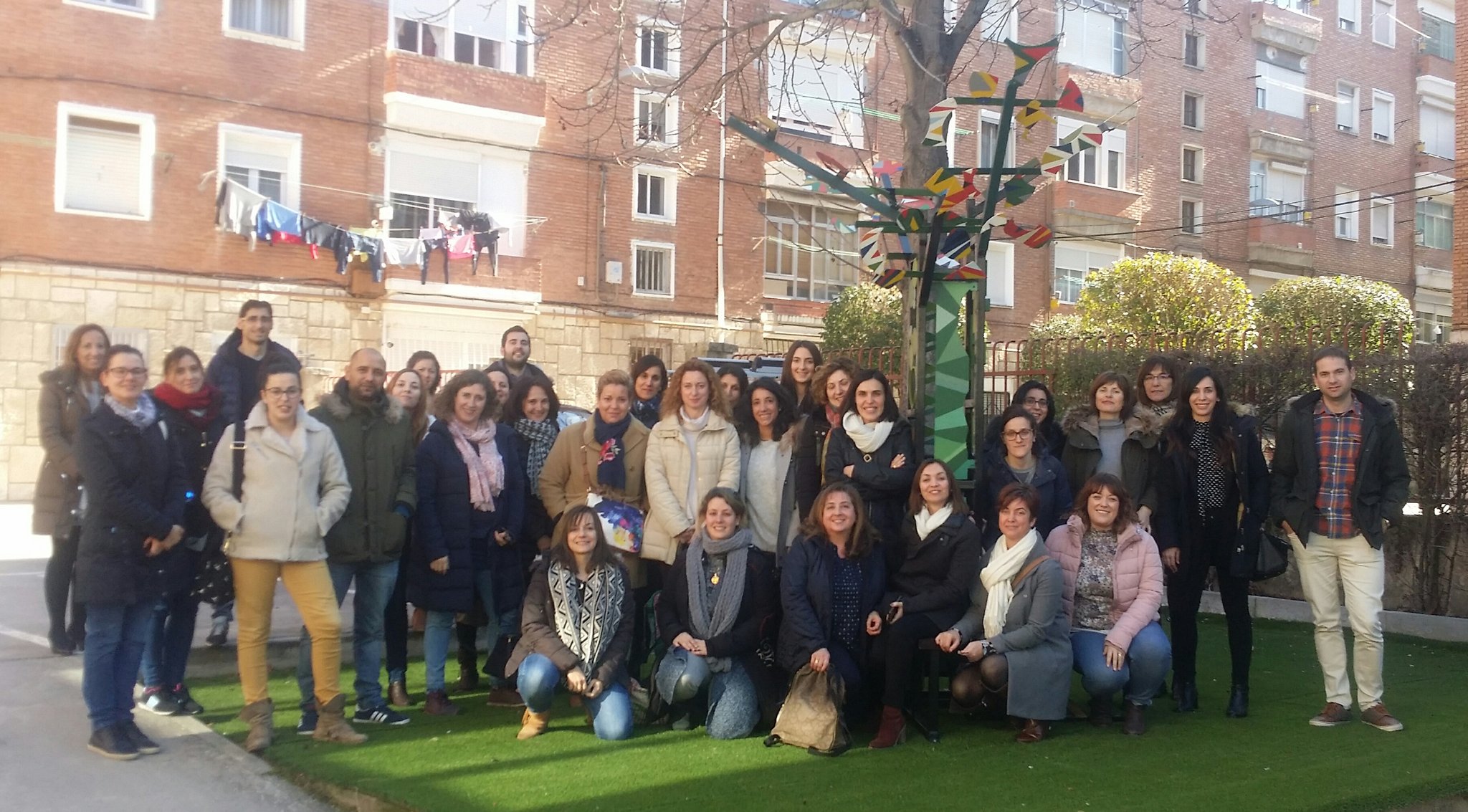
Our course for bilingual teachers CLIL for Subjects is about to finish. We have shared two face to face sessions on 30th January and 28...
|
Topic and project title
|
Violeta Monreal visits our school.
|
|
Your subject area: How will the project fit with your
subject?
|
My subject area is Literacy. With this project my students
are going to learn how to create a story and the sequence of events.
|
|
Who are you doing the project with?
|
With the Art teacher
|
|
Learning objectives
|
Read a biography to get information.
Plan and write a story following the sequence of events.
Act out a story.
|
|
Anticipated problems (and solutions)
|
Problems: At the beginning I wanted to create a story with
the whole class but I realized that there would be a lot of characters in the
story and it could be a little bit messy.
Solution: students worked in groups of five and create
different stories so they can act them out in front of the class to show
their mates.
|
|
Group and date taught
|
YEAR 4
From the 5th of
February to the 9th of February
|
|
What did you do?
|
CONTEXT: Violeta Monreal, a
Spanish illustrator, is coming to our school to give a workshop to our
students. The Art teacher and me decided to do a project together to study
this author deeply and practise the English language through it. The project
is divided in two sections: Before Violeta´s visit and After.
BEFORE VIOLETA´S VISIT
Session 1: Introduction to the artist Violeta Monreal.
Activity 1: Silent discussion
in pairs: Could you draw a picture without any pencils, paintbrushes or
crayons? How could you do that?
We share the answers (whole
class)
I asked the students if they
know an artist that draws without any of the things already mentioned. Then I
show them some books of Violeta Monreal ( the artist we are going to know
about) and her pictures(Violeta Monreal uses the collage technique to create
her illustrations)
Activity 2: QR hunt about
Violeta Monreal
Students go around the class
to look for the information in the QR codes and fulfil their questionnaires.
AFTER VIOLETA´S VISIT
Once Violeta Monreal has
visited the children, they are going to create a puppet character in the Art
Class following her technique (She does her illustrations tearing up pieces
of paper and sticking them to create a collage). Those puppets are going to
be used to create a story in English and act it out in front of the
classmates.
Session 2: Create a story
Students watch a video that
explains the sequence of events and it has got a chant. In this way they can remember
easily the sequence of events.
After that in groups they
have to put in order a short story that the teacher gives them in pieces.
Then they study the poster (see below) retelling the story.
In the end, in groups, they
plan and write a short story(story plan) using their characters and when they
finish they tell their stories acting out in front of the class( We will need
another session to listen to every group)
(scan and attach a copy of
the material you used, or paste any links below)
|
|
What went well
|
Students were well motivated.
They enjoy the QR hunt a lot. Most of the students achieved to create well
sequenced stories.
|
|
Reflection for future
practice
|
|
|
What needed improvement/changes and
why
|
I will need more tablets and
mobile phones for the QR hunt. I had only three tablets, one didn´t work well
so some groups of students had to wait to do their QR hunt.
|
|
What would you change considering
level, age or other factors
|
I would try to pay more
attention to those students that need reinforcement in English language
because although they had a lot of fun with this activity sometimes I found
them a little bit lost. For example, they had problems in following
instructions and they just copy the answers their group have in the QR hunt
but they didn´t understand so much what they had to do.
|


|
Topic and project title
|
Transport”
|
|
Your subject area: How will the project fit with your
subject?
|
Transport
is a topic where I can develop a lot of activities in Physical education and
in arts &crafts we can make transports and we can include vial education.
|
|
Who are you doing the project with?
|
with the English teacher
|
|
Learning objectives
|
1.- Define transport and
identify the three types of transport: land, sea and air.
2.- Differentiate between
public and private transport.
3.- Analyse the
characteristics of land transport.
4.- Analyse the
characteristics of sea and air transport.
|
|
Anticipated problems (and solutions)
|
In arts &craft class I am going to need more than two
days to finish the car craft.
In P.E pupils are not going to understand the mindfulness
story in English. Maybe I play it in Spanish.
|
|
Group and date taught
|
1º y 2º of primary . One
week, from February 14 to 17
|
|
What did you do?
|
(scan and attach a copy of
the material you used, or paste any links below)
English class
-Running dictation with
transports words and images .
-Activity book, and digital
activities. Road safety
-Bingo
-
Song. The wheels of the bus go round and round
Arts & crafts class:
Draw different transports: car, bicycle, lorry,
train, plane, ship…
Make a car with a toilet roll
Physical education
Simon
says: slow, fast,
you are a car, a plane, a bus…
The blind train. The students grouped in
groups of three. They are placed in a row as a train. All have their eyes
covered except the last one. The latter by touching the shoulders, right if
you want them to go to the right, and left if you want them to go to the
left, direct the rest of the comrades. The little touches are passed until it
reaches the first
Land, sea or air. A
row of blocks on the ground.
On
the right is land, on the left is sea and above it is air. It is said on high,
LAND, and they have to go to the right, if it is said SEA, to the left and if
it is said AIR, on top of the blocks. The one who is wrong is encouraged. Then
it can be complicated, saying a means of transport and you have to think if
it goes by land, by sea or by air.
A balloon trip
Mindfulness.
With music in the background, lying on the floor, eyes closed. A story is
told of a balloon trip, and we imagine everything that is happening.
https://www.youtube.com/watch?v=j_TMNn_yfUw relajacion en
español
|
|
What went well
|
Running dictation was very
fun for them.
|
|
Reflection for future
practice
|
|
|
What needed improvement/changes and
why
|
More days for the craft.
Spanish
mindfulness . Because I wanted them to feel the relaxation and be aware of
what they were doing at that moment.
|
|
What would you change considering
level, age or other factors
|
|


|
Topic and project title
|
DISVOVERING
COLLAGE
|
|
Your subject area: How will the project fit with your
subject?
|
I was an art & craft
teacher, in bilingual, and I ´ll do it in class.
|
|
Who are you doing the project with?
|
I´m doing the project with 6th
grade.
|
|
Learning objectives
|
Know what the collage is
Know what material we can work with
Use the recycling materials
|
|
Anticipated problems (and solutions)
|
PROBLEMS:
Not all children have the
same ability.
Know what materials the
students are going to bring, to make their projects.
Know if all children
understand the collage technique correctly.
SOLUTIONS:
Use the imagination, and make
different models so that they choose one that most suits their abilities.
Present different materials
can be used to carry out the work.
View some videos to show the
technique and make questions to do the feedback.
|
|
Group and date taught
|
Group 6th primary, from January 20th to March 1st
|
|
What did you do?
|
|
|
What went well
|
At this moment I can’t do it, but I
think all of this project can go well. With patient everything is possible,
and if we leave the children investigate, we will get people who think and
work their imagination.
|
|
Reflection for future
practice
|
|
|
What needed improvement/changes and
why
|
I need more experience and more work
and I need to investigate more about this topic in order to improve my
technique and so I´ll can teach better and have a wider range of recourses to
apply in the classroom.
|
|
What would you change considering
level, age or other factors
|
I think, I´ll change the way of
teaching in class, encouraging cooperative work and favouring the imagination
through a different techniques to reach an objective.
|
